
February 25, 2024
Sprouting Seeds: Living & Non-Living Science

One of my favorite science units to teach in kindergarten is our unit on Living and Non-Living! We spend a few weeks building our knowledge around what makes an object living or non-living then explore the differences between needs and wants.
What's more, this unit is a wonderful opportunity to expose students to non-fiction texts if they haven't learned about them already. I highly recommend digging through your school's library for some NF texts on living and nonliving things to have students read and explore. Epic Books and Pebble Go are other great virtual resources as well!
Week 1: What is Living/Non-Living
This introductory week allows students to develop a strong understanding of what makes an object living or non-living. They will use key vocabulary to describe objects (tying in their vocabulary from a previous unit on attributes/properties) and sort them based on what makes them living or not.
Week 2: Needs of Living Things: Animals & Plants
This week students build on their understandings and focus on living things as plants and animals. Students begin to identify the certain "needs" of living things and how they require these things to survive. This is a great opportunity to discuss needs vs wants...which ends up being a bonus discussion about accepting no.
I really enjoy using this resource from Kindergarten Creations. It has a lot of great visuals for this unit and for the student work pages, I size my copies down so students can glue their work/thinking into their science journals.
And who doesn't love a good Cookie Monster moment?? This is a fun video to share with students to drive concepts home about the basic needs of living things.
Week 3: Seed Sprouting Lab
In this week our class begins to apply what they've learned to a lab where they sprout a lima bean seed!

This ends up being my favorite week because students get the opportunity to sprout their own seeds and observe the beginning of a plant life cycle! In our class, we use lima beans (nice connection to our read-aloud A Bad Case of Stripes) and place them inside Ziplocs. You can use any type of bean (I've used some pinto beans from my sensory bins before!) as they all begin sprouting relatively quickly. I found this cute greenhouse cover where students write their names and decorate them. Afterward, I tape them up to our window and the watching begins!
It ends up taking a week or so before students can begin to see changes in their seeds. I place 3 inside their greenhouses to give them a greater chance of sprouting something.
Pick up this FREEBIE over at my TpT store so your students can begin sprouting their own seeds in a classroom greenhouse!

March 25, 2021
A Study of Snails | Kindergarten Science Unit


Last year was the very first year I learned about snails alongside my students. I was excited for this unit - a part of our study of the garden/plants - because I had always taught about butterflies. Although fun, it's been done so many times and to have the opportunity to learn about snails was something new...even for me!
When I taught as a kindergarten English teacher for a French-American school, my French colleagues taught the science and French language aspect of this unit whereas I was responsible for teaching my ELA objectives, but through the theme of snails. You can read all about my lesson ideas and what I did in ELA for snails here.

But now that I'm back to being a SAHM I thought it would be fun to create something that other teachers could use or even parents who may be distance learning still or homeschooling. Although what my French colleagues came up with was so fun to observe, there would be no way I could get everything translated. So, I chose to create a workbook that covers the basics of this unit and the scientific skills that go with it!
Here's what's inside!
An introduction to snails!

Life Cycles & Anatomy

Recommended Watching
Making Observations & Fine Motor Practice
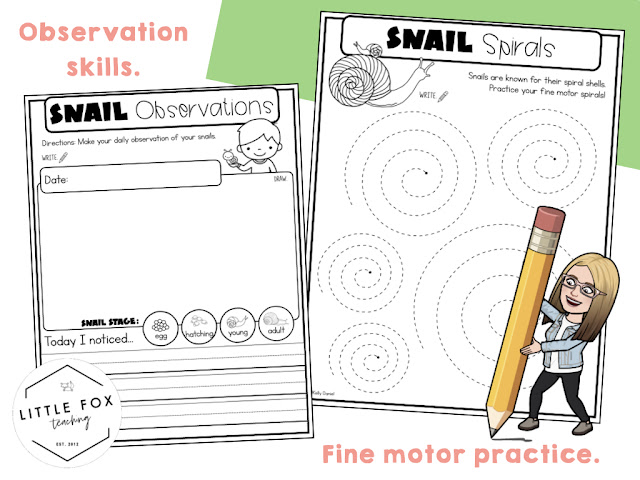
Choose your observation note style

A home observation & new class pet


- large aquarium tank with a ventilated covering
- dirt from outside
- collection of sticks, plants, and rocks (places for snails to hide are great!)
- a spray bottle of water to keep things moist inside
- snails love fruits and veggies (avoid citrus) and leafy green leaves
- they also love calcium (to keep their shells strong) so items like cuttlefish bones and egg shells are great to include in the tank
April 23, 2020
Plants & Gardens Unit | Snails

You can read my full disclosure policy here.
This week we're officially on spring break and it couldn't have come at a better time. Although this spring break does look a lot different than the one we had planned. We had to cancel our trip to Texas to visit family and even though I'm on break, my day-to-day routines haven't changed very much. I still wake up (admitting, later than usual) and find myself managing time between a full day with my son, checking email, and finding time to do things for myself in between.
However, now that I've found this new sense of time I thought it would be fun to finally get on here, spruce some things up (did you notice the slight website theme change??) and share what my kinders and I have been up to leading up to our break!
Exploring Spring
Spring had sprung a couple months ago and in English class with my kinders I took full advantage and kicked off our spring ELA theme! There has been so much learning, exploration, and fun these last couple of months - with this last month being our first with distance learning. If you've been following along, we've covered:And to wrap up our spring theme last week we learned about snails!
Snails! Les Escargots!


One of the awesome aspects to working at a French-American school is that I am exposed to a whole new way of teaching. From instruction to curriculum and, as a teacher, it's been amazing to learn and observe my French colleagues teach. With that being said, one unit in particular that I was most curious about was....snails!
Snails?
Yes, snails.
This was a first for me and I couldn't wait. Typically in kindergarten there's always a unit on life cycles and a popular life cycle to study, in my experience, has been with butterflies. They're easy to manage, the kids are excited to have new visitors in class, and they get to observe life happen right in front of their eyes over a few week period. However, at my school in kindergarten they learn about snails!
Over the last month (even with distance learning) I've found myself really enjoying this unit. From the days prior to schools being cancelled and seeing the kids light up as the terrariums were set up in the classroom to observing the first batch of eggs that were laid. Although much of their snails unit in French has been online, it hasn't the learning and excitement around these little creatures.
Snails and ELA

In English, students will use their background knowledge about snails to assist them in their understanding of the English language through read alouds, vocabulary work, phonics activities, and crafts. Meanwhile, students are beginning to learn about how to reflect and connect to their reading. Which brings me to our reading focus for the week...
Making text-to-self connections!
We're at the part of the year where students have really built upon their understanding of story foundations such as: story structure, story elements, who the author and illustrator are and their purposes, as well as
For distance learning purposes I decided to create a YouTube channel for my students. On this channel I have read alouds, handwriting, and activity explanations. This has been an extremely helpful platform to use for distance learning because of how easily I can create content, upload it directly from iMovie, and even share the link via my class' Seesaw.
For example, as we launched our text-to-self connections during garden week I created this video to introduce my students to the concept of how we can relate to the stories we read. I included this video as well as the read alouds (also found on my channel) in my lesson plans so that my students could find everything needed for specific lessons.
Reading Skill: Text-to-Self Connections
Because my French colleagues taught the science component of this unit, I wanted to focus on the language arts aspect with English vocabulary and developing their abilities to relate to the stories they read with text-to-self connections. We've been working on these kinds of connections and snail week will be our final one. It's one of the easiest for students to grasp and therefore the first one we tackled. Here's how I blended our unit on snails with ELA skill-building!Reading: Text-to-Self Connections
I used this freebie from Camp Kindergarten all week with my read alouds and activities. It's a great visual organizer for my kinders and gives them plenty of space to draw pictures - it's also a great tool to upload to Seesaw as an activity. With making connections, students would read (or listen) to a story and then draw a picture using details from the story and their own memories connecting the two.
 |
| Photo | Camp Kindergarten (FREEBIE) |
 |
| Amazon: $10.99 |
 In this story, Escargot is a snail who so badly wants two things in life: to be the readers' favorite animal and to eat the salad at the end of the story. However, when he finally gets to the salad he realizes there's a carrot on it...and Escargot hates carrots! This is the perfect story for my students to practice text-to-self connections because who are the world's pickiest eaters?? Kindergartners!
 |
| Amazon: $9.99 |

In addition, this story has a great SEL opportunity as well with: self-esteem, appreciating your own uniqueness, and understanding we're perfect as we are; that we should pretend to be something/someone we're not. There are a ton of stories with this message that can be used for text-to-text connections in addition to this one!
Snail Crafts
 |
| Photo | Toddler at Play |
Fine Motor Practice
 |
| Photo | Messy Little Monster |
 |
| Photo | Fiche-Maternelle |
Playdoh Snails
Working with playdoh (we made ours at home!) is a great way to build up fine motor skills, but it's great for expression of creativity as well! Greyson really enjoyed making homemade playdoh with me and I've been enjoying the hours of play...
For Fun: Snail Racing!
 |
| Photo: Kids Craft Room |
And that's a wrap for our snails unit!
March 27, 2020
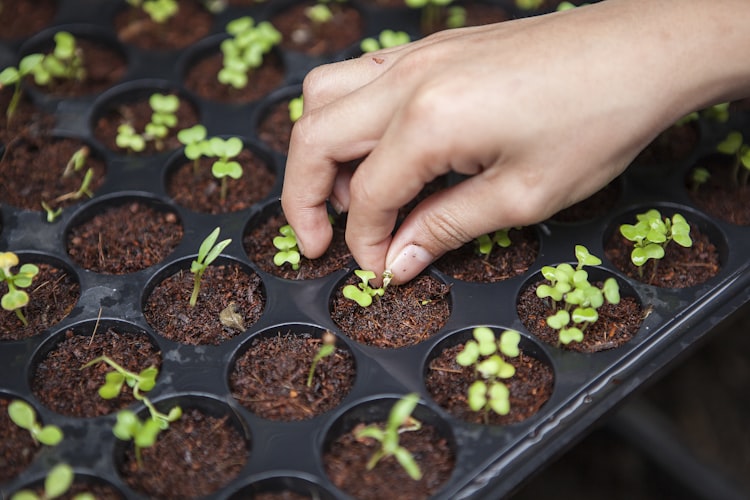
A Seeds/Plants Unit Workbook
It's kind of insane how in just 24 hours everything can change.
One moment my colleagues and I were just beginning the discussion of preparing for distance learning for a few of our students who decided to take precautions and stay home...to...school being shut down until further notice.
Then all of California began to slowly shut down...
...then social distancing turned into shelter-in-place.
Thankfully everyone I personally know, and my own family, are safe from Covid-19. I respect the precautions that our state (and country for that matter) is taking during such an uncertain time. The most all of us can do is to stay indoors for the protection of others. However, being home for the first week with my 4 year old and husband (who is also working from home) has proven interesting.
Nonetheless, my kindergarten team and I have been working tirelessly to create distance learning activities and lessons for our students. It's been a challenging task at times but not because of us putting together our plans, but the roadblocks that come from higher up. However, that's a different conversation for a different day.
Today, I wanted to quickly share out a new workbook that I created for my students while we're away from the classroom. We launched our seeds/plants unit and knowing I (and my students) wouldn't have access to a lot, I created a workbook that includes the activities that we would have covered in class. It's easy prep for parents as the only thing they need is to be able to print and have WiFi to access videos.


Incorporating Seesaw
This week our team expanded the use of Seesaw for students to use to interact more and to share their learning while at home. We informed our student families that not only would we email their weekly lessons and activities, but that additional activities will be uploaded to Seesaw for them to complete. This is a great option for the social interaction, but also for those parents who don't have a printer at home.Seesaw already has an extensive collection of assignments for all grades and creating my own is a breeze. It's been fun to see how my students are engaging with me and the work and I look forward to doing more with them.
For our seed/plant workbook, I periodically upload a page for students to respond to. For example, the first activity is labeling and coloring the part of a seed. I uploaded this page from their workbook and allowed them to snap a photo of their workbook or have the option to complete this part via Seesaw by filling in the blanks right there. I've enjoyed, so far, the capabilities of Seesaw!
Utilizing YouTube
By no means am I a YouTuber or even want to be. I don't like being recorded and I certainly don't like videos of myself. However, in times like these where distance learning is thrown into my lap I have to do what I can to be there for my kids. So, I created a YouTube channel! It's nothing fancy...but it's a platform where I can share my read alouds that I've created using Shadow Puppet.After I create my videos using the app, I simply upload them to YouTube and share the link in my lesson plans to parents. Again, nothing fancy or impressive...just simple videos for the stories I'm using as a part of my seeds/plants unit. You can check a few of them out here:
Guess That Seed!

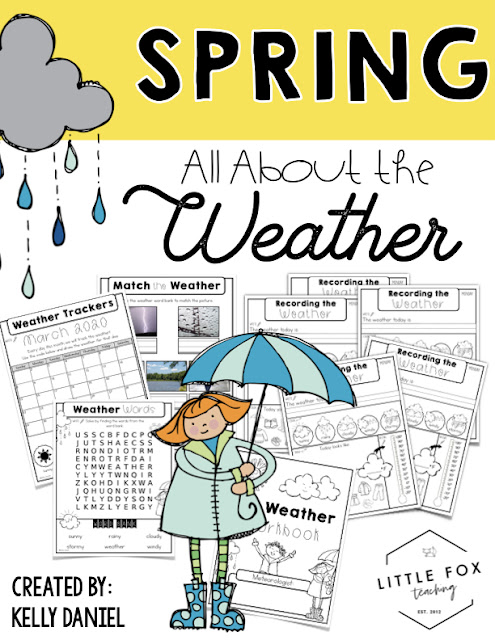
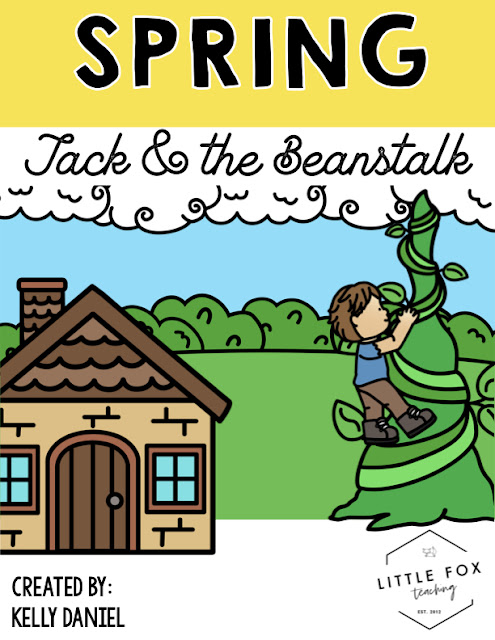
The Spring Collection
November 7, 2017
Matter Matters! | A Science Unit

This packet contains all the important objectives in a fun fill-in-the-blank format, which is perfect for those beginner note taking skills. I incorporated videos from Scholatic’s Study Jams (which are fabulous resource videos if you haven’t already heard of them!) as well as Brain Pop Jr. I also use this packet as a companion to a PowerPoint slideshow I made, which helps me keep my lessons on track.
I made some edits to my original packet, but for the most part all of the content is still the same. If you have already downloaded this unit, be sure to re-download the newest version. For those of you who need it you can pick it up at my TpT store here.
Lesson 2: Mass & Volume: Measuring Matter

October 7, 2014
Coming to Our Senses: 5 Senses Kinder Resource
Let's take a peek at what's new!
Sensory Posters

Matching Activities

Labeling

Seasonal Writing Prompts

Science Observations!


December 10, 2013
Snow Days and Matter!


This packet also includes:
-Why Does Matter, Matter? [3 states of matter]
-Properties of solids, liquids, and gasses
-Volume
-Mass
-Matter Picture Sort
-Measuring Matter [mass/volume]
-Changing States [investigating heat]
-Changing States graphic organizer
-Matter Molecules
-Physical vs. Chemical Changes
Experiment: Physical/Chemical Change Investigation
-Sugar Cube
-Solid, Liquid, Gas Poems
The best part about study packets is that teachers can choose what to include and what to omit. Feel free to add nonfiction articles or other items to your packet to make it more interactive and focused on a particular skill. I love seeing the different ways teachers incorporate content into reading or writing activities.
I'll be posting my other activities soon!
**THIS MATTER MATTERS DOWNLOAD HAS BEEN SLIGHTLY MODIFIED (TPT HAS THE MOST CURRENT DOWNLOAD).

Hey there!
