
May 14, 2018
End of the Year Awards!
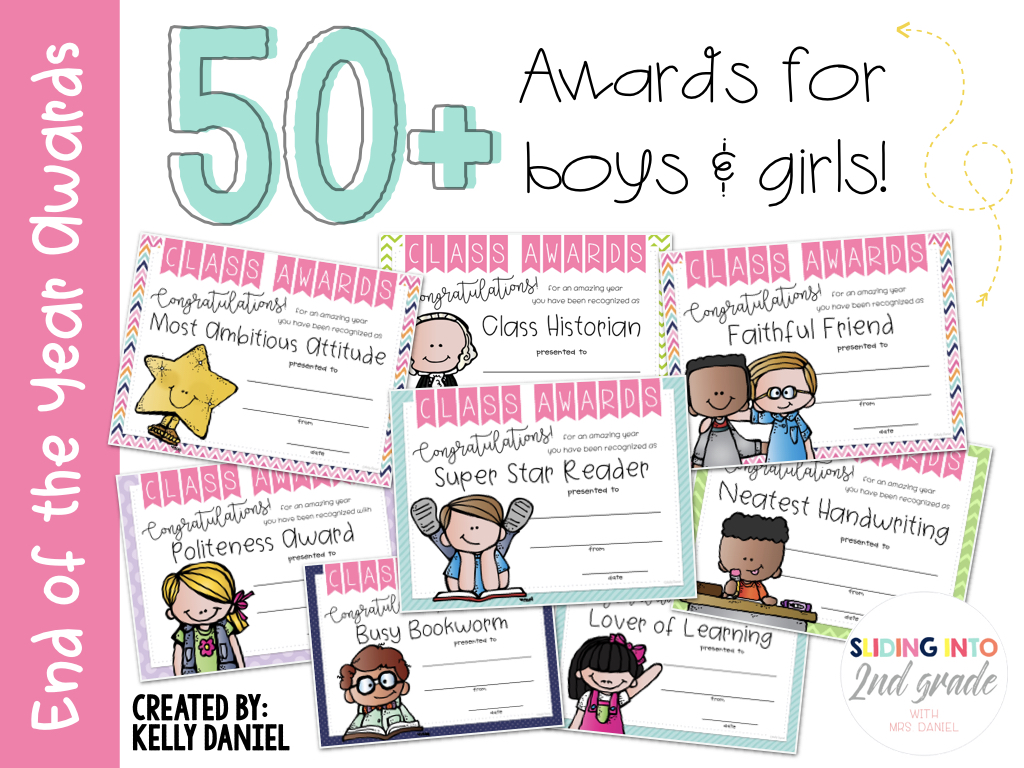
It’s already May, which means this is when many teachers are beginning to plan and prep their end of the year festivities - including their student awards. The end of the year is an exciting time, for both teachers and students alike. It’s a time where the school year starts to wind down, testing is either close to finishing or just getting started, and students begin their month of review material. In the middle of all of this are the coveted student awards.
Every school does something a little different, but for my old school we always had our grade level awards held inside our classrooms and invited our student’s families to be a part of this special day. Although prepping these awards (and the subsequent class party afterwards) can be tiresome, it’s nonetheless exciting to recognize each of my kiddos and the hard work they’ve put into the school year. It’s also a great time to gather parents and have them acknowledge their child’s hard work as well.
You’re Invited!
For any party one needs good invitations! This download comes complete with editable invitation templates that are easily copied and sent off with your students in advance. It’s a simple invite that outlines the ceremony date, time, and location. You can also hand sign it yourself before copying! This allows parents to easily tack onto their fridges and keep an easy reminder at home or to share with family members.

Close to every award under the sun!
There are a lot of reasons for a child to be recognized on awards day - and it goes beyond just ‘class clown’ or ‘best dressed.’ I’m sure those are acceptable things to acknowledge, Lord knows we have those students in our classrooms, but I think it’s really important for our kiddos to know they have contributed to the class and themselves in meaningful ways - not just because they’re funny.
In my awards resource you will find a variety of superlatives that can relate to your students. From the ‘Lover of Learning’ to that child with an ‘Inquisitive Mind,’ you’ll be able to easily find the right award for each little learner.
Also, most of the awards are complete with a boy and girl template! I wanted to make sure that each award is customized for the needs of most classrooms. However, you may use these printables in any way you want - boy, girl, or both!
These awards also come in a .zip format which includes a PDF for those wanting to just print and write in their own names - or if you’d like to edit them, to include your own fonts by using a text box over the PowerPoint version.
Either way, these awards are virtually the easiest thing for you to prep!
Preparation hasn’t been easier!
We all know that with the end of the year comes a lot of busy work to keep our kids’ minds engaged all the way up to the last day. This also means teachers are looking for resources that take minimal effort in preparing - I mean, we’re just as ready for the summer as our students!
So this resource couldn’t be more easily prepped!
That’s it!
With the prep work out of the way for your class awards you can spend your cherished time on other more important things! So hopefully this resource will make your days easier!

May 11, 2018
How to Pray | A Bible Lesson

Moving to California four years ago was a life changing choice. I was a newlywed and had our life, and my teaching career, already established. However, my husband received a job offer that relocated us from one coast to the other. Four days on the road and finally we had reached our new home with a fresh outlook and a hopefulness for our future.
It took me some time to find work right away, but eventually I was lead to a private Christian school where I would end up spending the next few years as an assistant teacher. First, I began in the preschool then worked my way to first and eventually back to second grade. During those years I learned a lot, had a baby in between, and due to my husband's new job we were once again relocated but this time to San Diego.
Looking back on my time at my school, I cherish those memories because I was able to work in an environment that was faith based and I could share in that with my students. One of the biggest skills that my second graders didn't quite have a firm grasp on was prayer. Prayer was sprinkled in throughout our day from morning meeting to honoring special occasions and events within our classroom as well as school-wide, so I found it to be important to break it down for my kids in a way that made sense and gave them plenty of opportunities to practice.
Which leads me to...
Teaching Prayer

Five-Finger Prayer Method
I should first point out I am not Catholic, but I have to say just how much I adore Pope Francis and his teachings. Pope Francis has been, in my opinion, more active across the world and in a lot of ways very forward thinking when it comes to doctrine and acceptance amongst Christians and Catholics alike.
One concept that he shared for children back before he was Pope was the Five-Finger Method for praying. It's a super simple to-the-point approach that allows for children to remember how to pray to God - expressing more than just the wants or needs of themselves. By using each finger, it reminds us of the people we should think about when praying.
* Amazon affiliate link

1: Your thumb is closest to you, so remember to begin by praying for someone close to your heart. These people are the easiest to remember.
2: Your pointer finger represents the people who guides, teaches, or heals you. Your prayers should be for guidance, discernment, knowledge, or courage to better be helpful towards others.
3: Your middle finger is your tallest finger, which represents the leaders within our schools, communities, and country. This includes prayers for those who make important decisions that could have a direct affect on others and ourselves.
4: Your ring finger is your weakest finger, so it is important to pray for those who are weak due to illness, homelessness, or have challenges or struggles.
5: Lastly, our pinkies are last and represents prayers for ourselves. By praying for others first, by the time we get to praying for ourselves and our needs our perspectives may change. The more we realize what others are going through, it can ultimately alter what we pray for.

Letters to God
One way, aside from praying, to communicate with God is by writing our prayers down. A lot of kiddos don't realize that God hears us just the same and these worksheets are a great resource in the classroom - or could even be put in a writing center during language arts!
This download comes with differentiated writing pages with and without guides. Choose which best fits the needs of your classrooms and print! Another handout I've included are prayer requests! It's another guided handout that directs students to fill in the blanks with people or circumstances they'd like to pray about (or even have others pray for them).

Scripture Journals & Reflections
One of the big ways we reflect on the month's scripture lessons are with consistent reflections and shares. After teaching a piece of Scripture, students copy the verse, record the verse chapter, and reflect on what they've learned or how they could carry on the lesson in their lives. At the end, they can draw a simple picture representing their reflections.
I look forward to using this not just in my own classroom, but also to have as a home resource with Greyson when he's older!
You can pick this resource up over at my shop today!
March 30, 2018
From Past to Present: Famous Americans MEGA Unit

You guys, I am so excited to finally share the pride and joy I’ve been working on and cultivating for the better half of a year. I began this product when pregnant and knowing I wanted to create an engaging note taking flip-book I set to work. Then, you know, I had a baby and all and somehow this sat on the back burner. As I got adjusted to being a new mom (and putting in a lot of effort into my lifestyle blog) I rediscovered this project and set to work on it once again.
Today, I am happy to share with all of you everything you’ll need to engage those little learners of yours when introducing them to your unit on Famous Americans!
Due to every state being different in terms of which Americans one studies in grades K-3rd, I’ve decided to include the majority of the ‘famous’ ones:
- George Washington
- Abraham Lincoln
- MLK
- Jackie Robinson
- George Washington Carver
- Susan B. Anthony
- Harriet Tubman (as seen in photos)
- Rosa Parks
- Thomas Jefferson
- Thurgood Marshall
- Betsy Ross
- Benjamin Franklin

There are two types of note workbooks available for you.
First, I have a basic template that is easily put together and enhances any curriculum you already use to instruct. Each slide is a full page perfect for your little learners to fill in the basic information about each historical figure. Simply print copies and teach one figure at a time or opt to print the ones you need and keep them in one handy workbook.

Second, is this flip-book style of note taking which surely to engage your students and keep their minds thinking about the particular person being covered that day. There are 5 slides per figure (cover page, biography, fun facts, contribution, and timeline) and each page requires the student to either complete the information whether it be through research or copying from a provided presentation by you, the teacher. The contribution page will demonstrate that the student understands the figure’s importance to U.S. history and citizenship, and finally, the timeline is an extra skill practice by filling in important events during that persons life. It’s a great culminating activity!
Pick & Choose What To Teach!
Because it’s a flip-book teachers can also choose whether to omit a page. Don’t need to cover timelines or afraid students aren’t ready for that skill yet? Don’t include it! ;)
Assessments or Anecdotals?
This packet is also great for using as anecdotal notes or assessments with having the first two pages be a guided instruction piece, leaving the writing and timelines to be graded. This download really works in any capacity!
TAKE A CLOSER LOOK!
Biography
Each booklet begins with a section for students to copy the name (a bit of handwriting practice) of the historical figure in which they’re learning. Basic facts such as birth and death dates are provided, a state/colony diagram for students to fill in where they were born, and a few biographical facts to fill or color in.

Fun Facts
After the biography section, students will move onto the chunkiest part of information presented. I’ve personally designed this section to be a mixture of skill practice and requires students to answer simple questions or fill-in-the-blank with specific pieces of information about that person. This section can be used along with any unit plan/PowerPoint slides, etc. or can be easily used as a review packet.

Contributions
The biggest part of learning about our Famous Americans are recognizing the contributions they’ve made on our society or country as a whole. Each person is a valued member of our nation’s history and it’s important for students, as citizens of the United States, to be able to understand how they’ve impacted change, civil rights, and progressed our country over time.
This section ties in writing skills by focusing on a paragraph using the guiding phrases. Students simply take the information they filled in on the previous page (along with any other information they learned) and condense it into a paragraph summing up how that figure contributed to our country. I love this section because each student can reflect and use whichever facts they like; making each paragraph unique.

Timeline
A timeline is a skill students are introduced to and use in first grade. However, timelines make appearances in second grade as well when students begin reading nonfiction books and learn to use them as tools to comprehend their reading. Why not tie, yet again, this skill when studying Famous Americans?
This section can differ depending on which grade you teach.
- You may provide your own timeline where students simply copy what you’ve already compiled
- Students can be sent to a nonfiction station that provide a variety of text on that person. While reading, they record what they find as they fill in their own timelines.
- As a whole group you can project events in that person’s life out of order for students to rearrange based on their knowledge.
See? There’s all kinds of ways to work on chronological order with timelines no matter how facilitated you’d like to be with your students. Either way, they’re engaged in their learning and practicing an important skill all at the same time.

Teacher Answer Keys!
Each packet whether you use the traditional notes or the flip-book comes with a Teacher Answer Sheet. This provides all the answers to the fill-in-the-blanks, which, of course, takes the guesswork out of the equation on your end!
Easy Preparation!
Another reason this packet is an essential product to have for your classroom instruction is because it’s a simple: print, copy, staple and done! You can also print them out and have your students assemble those packets or put your very kind parent volunteers to work on the task! Either way, this download takes all the hard work out of your hands.


January 11, 2018
Sweet Treat Fractions!

This post may contain affiliate links where I will earn a small commission.
You can read my full disclosure policy here.
You can read my full disclosure policy here.
It’s
that time of year again where fractions begin to make their debut in
classrooms and today I am so excited to share with you how I’ve taught
this unit to my kiddos. Fractions can always be tricky for some kids
because it’s the concept that a whole object can be divided into parts
and how we label those parts.
I’ve found that first, introducing money (a
dollar is divided into quarters, etc.) or time (half past, quarter past,
etc.) makes fractions easier to grasp because students have that schema
from earlier lessons in the year.
Study Jams by Scholastic

Study Jams
by Scholastic is another great resource to add to any lesson. They
provide wonderful visuals and they’re completely free! Scholastic
provides a ton of videos for multiple math and science topics, which
helps make teaching these tougher concepts a breeze.


Introduction (via)
I personally love beginning this unit with a reading of Eating Fractions because it ties in perfectly with our "sweet treats" theme. However, any of these read alouds would be a great introduction of the concept!
After reading and discussing with students what a numerator and denominator represents, discuss how to write a fraction and use examples from the book to reinforce these ideas.
After reading and discussing with students what a numerator and denominator represents, discuss how to write a fraction and use examples from the book to reinforce these ideas.

Guided Practice
Using jellybeans, pour 20 onto a desk in front of the class so everyone can see. Invite a student to come up and count each jellybean - this will be the denominator. Encourage your class, or student, to explain back to you that this number represents the “whole", or the total number of jellybeans. Repeat this step with each same-color jellybeans on the table and practice writing the various fractions that are found. Students can watch or you can incorporate class whiteboards!
Afterwards, add up each of the numerators to demonstrate that it will equal 20, which is your denominator or “whole”. I always share with my kids that adding the numerators is a great way to check their work!
At this point you can play the Study Jams video on fractions or head straight into the craftivity!
Independent Practice
For the independent practice portion of this lesson there are a variety of 'sweet' activities to choose from. Over the course of the week we read a variety of the read alouds outlined above and practice using a different activity from this bundle. Here's a peek at what we complete over the course of the week:

First, students choose four colors, which will represent their gumballs. They will decide how may they want to draw inside their machine. From there, they'll count and represent the colored gumballs as a fraction. Once the math representation is completed, they may design and color their machines and glue to their construction paper for displaying.

Another fun activity to do with the kids is fraction sundaes!
It’s another popular way to have kids demonstrate their understanding of fractions by choosing their flavors and writing out the fractions. The key to this activity (and the gumballs) is to limit the number of flavors your students can pick. The first time I did this activity I kept it open-ended to see where it would take them, but reeling it in helped my kids focus on just a few flavors at a time and focus on writing their fractions correctly. Those higher achieving students can always complete a second sundae in their math notebooks when they finish!
Cookie FractionsIt’s another popular way to have kids demonstrate their understanding of fractions by choosing their flavors and writing out the fractions. The key to this activity (and the gumballs) is to limit the number of flavors your students can pick. The first time I did this activity I kept it open-ended to see where it would take them, but reeling it in helped my kids focus on just a few flavors at a time and focus on writing their fractions correctly. Those higher achieving students can always complete a second sundae in their math notebooks when they finish!
The Doorbell Rang by Pat Hutchens is a fun story about diving cookies so that all the kids can have an equal amount. This story is a great introduction to this activity where students have their cookie to divide and represent the fractions they create. I’ve made templates for halves, thirds, fourths, sixths, eighths, and tenths as well as a blank one. Students represent fractions both in numerical form as well as tracing the word form too.

I tried this activity a few years ago and I absolutely love how engaged my kids were throughout the entire thing! It was so easy to prep - you just need pink and white marshmallows (or use mini to large) and place them in the baggies that will represent different fractions. I prepped these ahead of time and even created a little cheat sheet that had the fractions I created recorded so it made checking their work even easier.

Fractions can be so much fun and I’m excited to share these activities that have been proven to keep kids engaged the entire unit!
What fun activities do you plan for your kids for teaching fractions?
January 1, 2018
Ringing In 2018 | A NYE Craftivity + Writing Prompts

Getting Crafty
Craftivities really help engage our little learners because it requires them to interact with the lesson in a tangible way. It keeps them working and their brains thinking all the while taking in new skills. This NYE writing unit combines reflective writing prompts with a fun craft for students to create!
Students will create a self-portrait of sorts using any coloring materials you’d like. I personally love using glitter on the 2018 glasses because it really adds a pop of detail and brightens up the bulletin board, hallway, or wherever you’d like to display them. The kiddos design their own party hats (can even be used in math with some kind of glyph!) and attach their writing so that the final product looks like their person is holding their new years resolutions writing. I love this activity every year because it’s a great introduction to writing after a long winter break.

Prompt Variety
This unit also includes a variety of writing prompts that will be sure to get your kiddos thinking about the year ahead. There’s always so much talk about setting resolutions, or goals, and this is the perfect time to introduce, or re-introduce, goal setting. Resolutions don’t have to be cumbersome goals, but rather little goals here and there that are attainable within a reasonable amount of time. Have students think about the areas (both in school and out) where they would like to improve and the ways in which they can take steps towards achieving that goal.
NYE celebrations also look different for each family or culture so why not showcase this classroom diversity? Having your students share how they celebrated will be sure to be a fun discussion and sharing time upon returning to school.
These prompts don’t all have to be used as a whole group writing activity either. Simply place them into a reading center or use as morning work on those first few days back from winter break!

Sometimes students need a little prompting to get their creative minds working! I love this Counting Down To A New Year handout because it gets my kids thinking about specific details they can add to their writing about their new years goals.
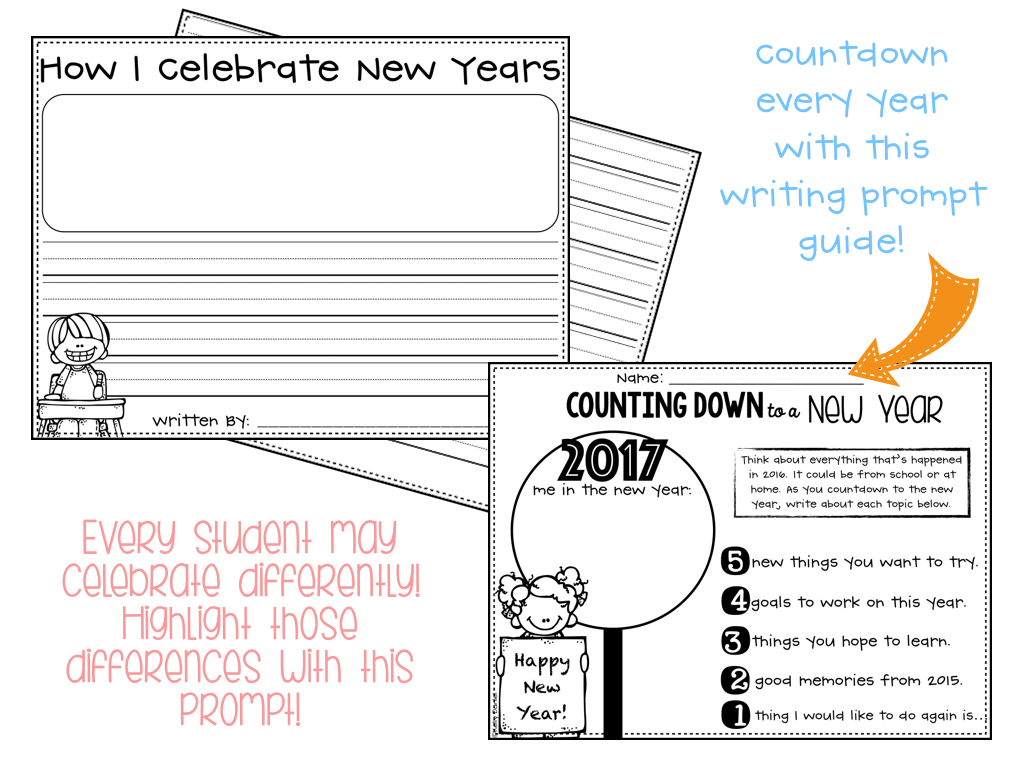

Lastly, reflection on our growth is important regardless if you’re a student or an adult. This worksheet has students reflect on the past, present, and future and how they can improve over time. It’s also a great way to show them that although they may not realize it at the time, growth does occur and one should be proud of those achievements. Have students think about where they started, how they’re doing on that goal now, and how they can stretch themselves in the future. Such a great conclusion to this lesson!
Subscribe to:
Posts (Atom)
Hey there!
