
Posts with the label RIASEC
Showing posts with label RIASEC. Show all posts
Showing posts with label RIASEC. Show all posts
March 2, 2019
World of Work: Doctors

In our district we have an initiative called World of Work (WoW), which exposes students to various careers that align with specific personality traits, strengths, and interests. RIASEC codes (developed by Dr. Holland) stand for: Realistic, Investigative, Artistic, Social, Enterprising, and Conventional. In EAK this year I get the opportunity to introduce students to WoW and begin exploring with them and identifying the codes that best fit their own interests and strengths.
- problem solving
- using science or math to solve problems
- observational and analytical
To best expose my students to these interests and skills, I developed a unit on Doctors and added lessons about germs in the process! Here's what I've included in my unit and a few resources that helped me bring a fun and engaging experience to our little learners.

Doctors use tools: Stethoscopes and X-Ray Machines

My students learned that doctors and nurses use different kinds of tools to do their jobs and to keep us healthy. One of those tools is a stethoscope! They really enjoyed the Doctor Station this week as they pretended to be doctors and patients in our dramatic play center. It was really fun to see and hear them socializing with each other and using the new vocabulary we've been discussing in our lessons!

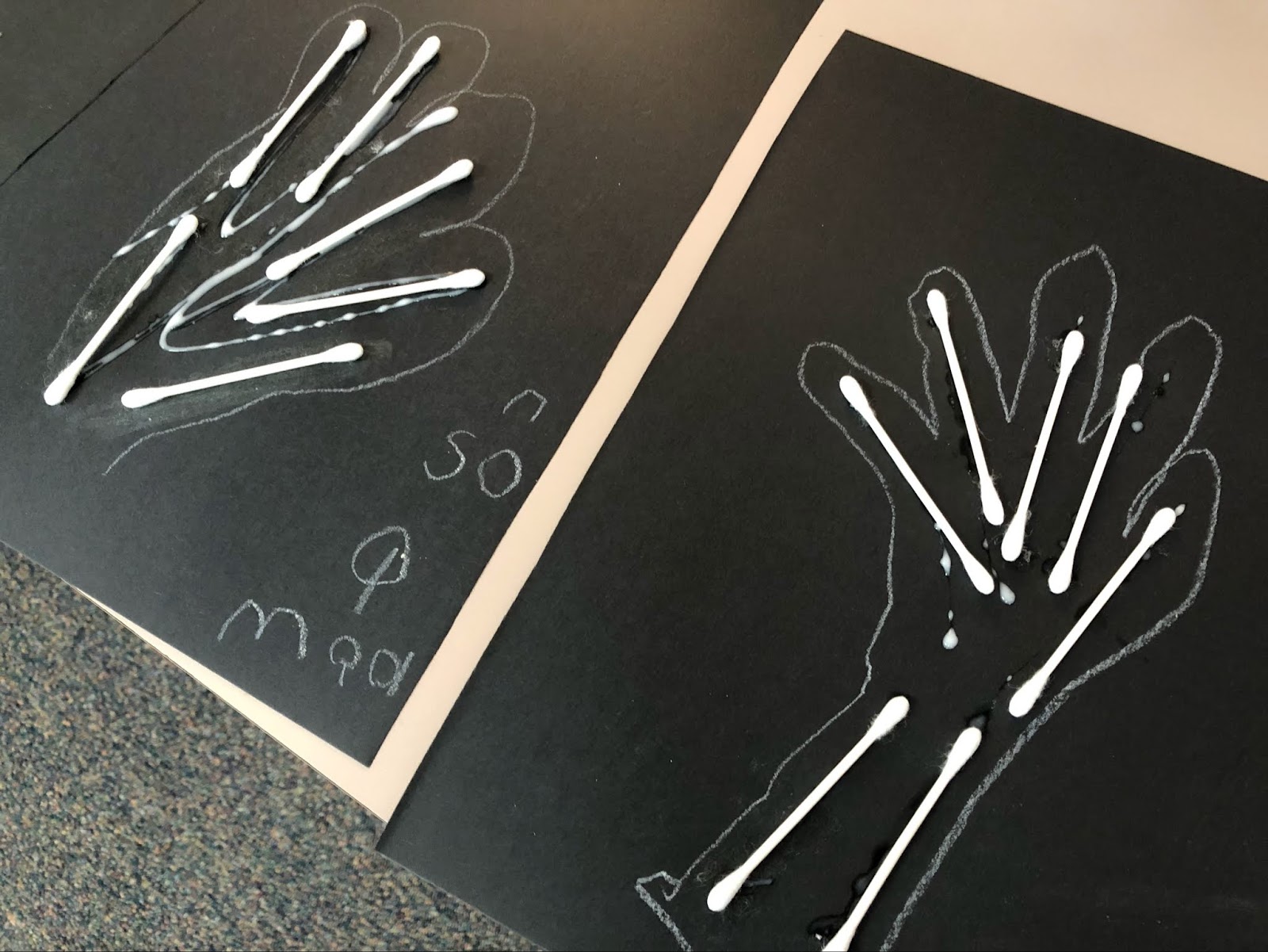
Also, one of our art projects was creating our own x-rays using white crayons, glue, and q-tips! I introduced them to x-ray machines that they take pictures of our bones. I also shared that dentists are also a type of doctor that helps keep our teeth healthy - they had no idea that our teeth are also bones and that dentists use x-rays to see inside our teeth and gums!
Thank you Amber from ABCs to ACTs preschool blog for this wonderful idea!
Growing Germs
 |
| photo credit: Playdough to Plato |
Playdough to Plato is a wonderful preschool blog that has so many great ideas. I happened to stumble upon her Growing Germs experiment and I knew my class would love to do this. Sorry I don't have my own photo to share, but our apples turned out very similarly to hers!
We talked every day about what we were observing (which is practicing their Investigative code as well!) on our apples and discussing why the "dirty" apple started growing germs moreso than the other slices. It was really cool to see their interests grow!
Germ Blow Painting

Blow painting is one of the easiest centers to pull together! This week in our Artistic station, or our Maker Station, students created germs by blowing paint! I only had them work with one color and I added water to the paint to help loosen it. I snipped the straws in half so we could make them last and it worked!
It was fun to see the different "germ" people they created and now we get to display them in our classroom! I loved incorporating this idea from Sam over at Simple Everyday Mom blog! There are so many ways to bring this blow painting to life and use it for various lessons or topics.

BrainPop Jr.: Going to the Doctor

I personally love using BrainPop Jr. to enhance any unit and have used Annie and Moby plenty of times as a 2nd grade teacher. I was curious to see if I could find any videos that could be used in our unit about doctors and health. Thankfully, Annie and Moby have a video called: Going to the Doctor.
In this video they explain that doctors are medical professionals that keep our bodies healthy. I love that they shared that we should all go to the doctor for regular health check-ups as well as when we don't feel good. This video was a great way to show my little EAK students that going to the doctor doesn't have to be scary. Throughout the video, Annie walks you through what to expect from when you arrive to why doctors ask the questions they do. She shares about the different tools they use and even talk about why vaccines are important. Best of all, this is all explained in under 5 minutes!
This week was a lot of fun and I really enjoyed seeing my students love their learning about doctors. What fun activities do you share with your students to teach them about doctors and germs?
February 11, 2019
We're Going on a Nature Walk!

Nature Walks are a wonderful (and easy!) way for students to engage with not only their learning environment, but with the curriculum! For my busy EAK class I thought it would be fun and worthwhile to get them outside and expose them to learning that exists right outside in nature.
Throughout the last few weeks I've been introducing my class to the RIASEC codes from our World of Work initiative within my district. These codes help expose my students to the skills and interests that make up who they are; from Realistic "doers" to Artistic "creators", my students have a unique opportunity to learn more about themselves and apply what they're interested in in more meaningful ways.
Investigative "Thinkers"
The I in RIASEC stands for Investigative who are the kinds of people who enjoy activities that involve thinking, problem solving, observing, and analyzing. Investigative "thinkers" also enjoy using science and math to solve such problems! So, what better way to learn about what these thinkers enjoy doing than a Nature Walk?!
 |
| photo credit: Cajon Valley USD |
I had a couple of parent volunteers assist me on our Nature Walk, which was about 10 minutes or so of walking around and selecting 4 items from nature to bring back to class to observe. I created these simple observation forms for the kids to use (drawing is a type of early writing for this age group) and I was excited to see what they'd find!
Some students found some really interesting and diverse pieces of nature to analyze. Some found seeds, leaves were the most popular, and others found grass, rocks, and sticks. I was surprised to see that none of them thought to bring in dirt or even a bug! Perhaps next time, haha.

When we returned to class I had my students lay their items in the boxes on their papers. I modeled for them how to analyze and look at the details of their nature items and begin drawing them exactly as they see them. Of course, at this point my EAK students mostly drew lines or just outlined their items, but it was fun to walk around and see how each of my kids interpreted their items.
Through this activity I was able to see who really embraced the activity and could quite possibly have an Investigative mind. I had a few students who really enjoyed looking at their sticks or leaves and I spoke with the class about how each leaf that students picked were slightly different from another. I also shared that within their drawings they could include details like the colors they used.

Even though wrangling 20 four year olds on a Nature Walk was quite the adventure, seeing them engage and be excited about making observations about nature was fulfilling for me as their teacher. It was exciting to see the language they were using and how each of their drawings represented their understanding of the world around them. I am always in awe of their thinking and it's been a privilege to expose them to such learning!
February 9, 2019
Make It Mondays

In my district we are known for our World of Work program, which is a curriculum that uses Holland Codes to allow students of all grades to explore their interests and the careers that are assigned to those interests and skills. Even young learners, like my EAK students, are encouraged to explore their interests (which fits very well into my All About Me unit) and the careers that best fit them.
Each day last week I introduced my kiddos to the Codes known as RIASEC. Dr. Holland developed these codes based on research and studies that showed that everyone's personality fit into one (or many) of these codes. RIASEC stands for realistic (builders, doers), investigative (thinkers, observational), artistic (creators, artists), social (helpers, teachers), enterprising (speakers, leaders, sellers), and conventional (organizers, likes things in their place).
Bears Challenge

For example, the very first week I rolled this out I challenged students to build a bridge using only sticks and cups. They were only given four of each and were first challenged to fit 10 bears. The kids found ways to adapt and change their designed bridge in order to accommodate the bears. Then, I asked students to fit 15 bears, then 20. Each time it was really awesome to see kids problem solve and push through the challenge despite being frustrated a time or two.
Building a Bridge

Another fun way to get my kiddos to tap into their building spirit was challenging them to build a bridge using only legos. I had one photo as a reference but allowed them to come up with any design they wanted as long as it was bridge-like.
Marshmallow Structures
Additionally, in my building center I try to change up the activities so that what the kids are exposed to whole-group can be practice individually. In my building center I placed the good 'ole fashioned marshmallows and toothpicks to allow my kids to build structures that were different shapes. Some explored 2D and even 3D shapes on their own...and one of my kids was the only one to successfully complete the challenge of building a structure to hold an item! I was so proud of him!

What are some of your favorite ways to tie in STEM skills during the day?
Subscribe to:
Posts (Atom)
Hey there!
