
June 26, 2018
Teacher Tidbit Tuesday | Teaching History
Taking a little bit of a break from making a new product incorporating Eureka Math concepts (coming soon and I can't wait to share!) to join in with Life in 5th Grade, among other amazing teacher bloggers, for Teacher Tidbit Tuesday. Over the summer, and on each Tuesday, they host a blog topic to learn a little more about the teacher behind the blog! It's such a great way to meet others and learn more about the person!
And today is all about sharing a little about our teaching history.
So, join me as we venture back to 2011...
2011 is when I graduated with my Masters in elementary education from George Mason University in Virginia. When I was an undergraduate I knew on day one that I wanted to be a teacher and worked pretty hard to achieve that. So, when it came time I, along with a number of friends and people from my cohort, decided to go straight into grad school. At the time I thought it was the best option considering everyone (and now knowing as an adult years later) says that it's much harder going back to school then to just keep going and earn your degree.
So I did just that.
Towards the end of my graduate studies and internship, I found that a number of my friends were already getting job offers for the following school year. It made me feel nervous because I had zero offers and the school year was creeping up. Then, after applying to a dozen school districts near me, I got a phone call for an interview at a school right down the road from me.
I was thankful for the opportunity and received my first teaching position as an AM/PM kindergarten teacher. At first, I was hesitant about the position considering most of my field experience was with older grades and I was unsure about the half-day program. However, and like anything new, I hit the ground running and did my best to survive this new working culture. As anyone would say, their first year is treading water hoping to keep your head afloat. That year had many challenges, but I was thankful that I had co-workers and friends to help guide me through it.
As my first year teaching came to a close and I was preparing for my second year in kindergarten, my principal had an opening in second grade to which he assigned me. To survive my first year and then to switch grades can be matched with the feeling of starting your first year all over again. However, I was excited to join a new team and fell completely in love with second grade!
Total, I spent 2 years in second grade at my school before my husband (fiancé at the time) moved us from Virginia to California for a work opportunity. I enjoyed my three years at my school, but was eager to start somewhere new and broaden my teaching experience.
When we first arrived in California I wasn't anticipating the difficulty in trying to transfer my teaching license. California, I've learned, is very picky about what transfers and what doesn't - in addition to taking all my money! :)
But within that time from 2014 to now, I found an amazing Christian school to call home as an assistant teacher. Funny enough, I began in their preschool as an assistant considering no one was hiring in September (when we moved), but was grateful they made room for me. Since then I've moved up to first grade - had a baby and took time off - and resumed this past January in second grade. Now, beginning next year I will be taking over for my previous first grade lead teacher as she prepares to have her baby!
So if I were to ask myself if I could ever predict that I would have had the life and career experiences I have so far, that would be a definite no. But, there's something special in the way life changes things up, forces one to grow and evolve, and even find the time to take rest when needed. I am thankful to each and every one of my schools because I've been afforded challenges, opportunities for growth both personally and as a teacher, and experiences in more than one grade level.
This year I earned my California teaching credential and am in the process of clearing it, which requires a couple of extra steps (i.e. state exams/coursework- boo!). So, if you have any advice or tips/tricks for taking online classes I'm all ears!
I'd love to connect with you further in the comments about your teaching experience! What grades have you taught? Have you ever moved or changed schools? Found yourself in a new state? Let me know!
PSSST...
Don't forget about my little sale going on this week over at my TpT shop!

June 25, 2018
Routines That'll Save Your Mornings + Sale!

Whether it's the first day of school or just any 'ole day of the week, it's so important to have the right routines in place so that chaos is minimized and students are actually engaging with their learning. Morning routines are a great way to maximize that half hour or so - allowing you to get those last minute things prepared.
Today I thought it would be great to talk about some helpful morning routines and how easily you can incorporate a few of them into your daily schedule.
1. Engaging morning message
 |
| photo: Learning with Mrs. Langley |
By having a morning greeting, and it being the first things kids do when entering the classroom, it gives them a start off point to their day. From there they can ready their materials at their desk and begin their morning work.
2. Morning work and brain boosters
 |
| photo: Mrs. Beattie's Classroom |
Every morning my kiddos have the opportunity to practice and review key concepts taught earlier in the week then catch up on any unfinished work. Morning work, or brain boosters, routines and expectations are laid out right from the beginning of the year so students know what to work on and choices they can make when they finish.
I always make sure that the necessary materials are available as to cut down on wasted time and the risk of students getting off task. The work I give my kids follows a similar framework all year so that they know how to complete an activity without me having to give directions a million times.
And don't think morning work always has to be worksheets!
- Other ideas I love for morning work are a Rise and Shine binder where each day students work on a set of concepts in language arts, math, or phonics.
- Try having hands-on activities that require cutting and pasting, coloring, use of play dough, or a variety of word work activities that keep those tactile learners engaged!
- Students can have a choice in their morning work with a 'menu' of activities they can complete.
- Or even have morning work stations like this awesome kinder teacher!
3. Morning Meeting
When I was completing my student teaching I was introduced to the Responsive Classroom method. I really enjoyed how inclusive it was and how it stressed the importance of classroom community all throughout the day. One aspect of this method that I've always included in my daily schedule has been morning meeting. I love the chance to meet with my kiddos to go over the objectives for the day, touch base with them about the goings-on in their lives, and do an activity together like calendar math or another skill practice.
Morning meeting can look and feel a number of ways, which is why it's so great to do! Here are a few ideas that caught my eye and that I want to somehow incorporate next year!
Sharing: This is possibly the most favored part of morning meeting as it's a time for students to share what's going on with them. It's also a time for other kiddos to ask questions or give compliments or comments about what they each shared.
Morning Message: Here is where the message from the morning routine comes back into play. It's a message written by you, the teacher, and focuses their attention on what they'll be learning and doing that day. I love including questions or review and using this time to go over student responses and how it ties into what they'll be learning.
 Have you used Responsive Classroom before? What are your favorite or least favorite aspects?
 In conclusion, don't waste your precious moments in the morning! From the time your kids walk through the door be sure you have engaging and interesting activities available for them while you're busy getting those last minute things done. And don't forget those early finishers, either! By sequencing the morning, I've found that my kids stay on task and always have something they can be working on - and the best part is, they want to!
Morning meeting can look and feel a number of ways, which is why it's so great to do! Here are a few ideas that caught my eye and that I want to somehow incorporate next year!
Responsive Classroom Meeting Routine
Greeting: Each morning students sit in a circle and greet each other in different ways. They practice communication skills like eye contact and simply, the art of greeting people - which can be intimidating for some. I love mixing it up between high fives, handshakes, or something the kids invent and saying hello or good morning in a different language.Sharing: This is possibly the most favored part of morning meeting as it's a time for students to share what's going on with them. It's also a time for other kiddos to ask questions or give compliments or comments about what they each shared.
- Bear Share: I love Reagan's idea of using bear counting manipulatives to help guide her students and keep them on track during their share. Read all about it here!
- 'Class Pet' or Flat Stanley: Use either of these ideas to allow students a time to share their adventures with the class pet (stuffed animal) or Flat Stanley.
- Discovery Journals: I loved using this research/writing activity for years now! It allows those kiddos who want a little more to practice early researching skills and practice writing an 'All About' piece on whatever topic they choose! See how it works here!
 |
| photo: Tunstall's Teaching Tidbits |
- Use themed prompts in terms of the days of the week (i.e. 'Thoughtful Thursday', 'Monday Make It', etc.)
- Incorporate your board for your messages instead of a paper or dry-erase easel!
So, no matter how you start your day make sure it engages your kiddos, boosts their brains for the day, and invites them into a welcoming and open community within the classroom! Ever since I began using Responsive Classroom foundations, I've seen a direct impact on positive interactions between students, orderly and efficient time spent in the AM, budding communication skills, and an overall sense of belonging.
 Have you used Responsive Classroom before? What are your favorite or least favorite aspects?
For more information about the Responsive Classroom morning meeting approach, be sure to check out their many books and online resources! I would also love to help answer any questions you may have, so feel free to pop on over to the comments and let's talk!
In conclusion, don't waste your precious moments in the morning! From the time your kids walk through the door be sure you have engaging and interesting activities available for them while you're busy getting those last minute things done. And don't forget those early finishers, either! By sequencing the morning, I've found that my kids stay on task and always have something they can be working on - and the best part is, they want to!
But, I want to know from all of you veteran teachers! What are your favorite activities you use in the mornings and how do you keep your kids engaged for the whole period?
P.S. be sure to pop on over to my Teachers Pay Teachers shop to pick up essential guided reading resources for 20% off! This sale runs today through Thursday!
May 14, 2018
End of the Year Awards!
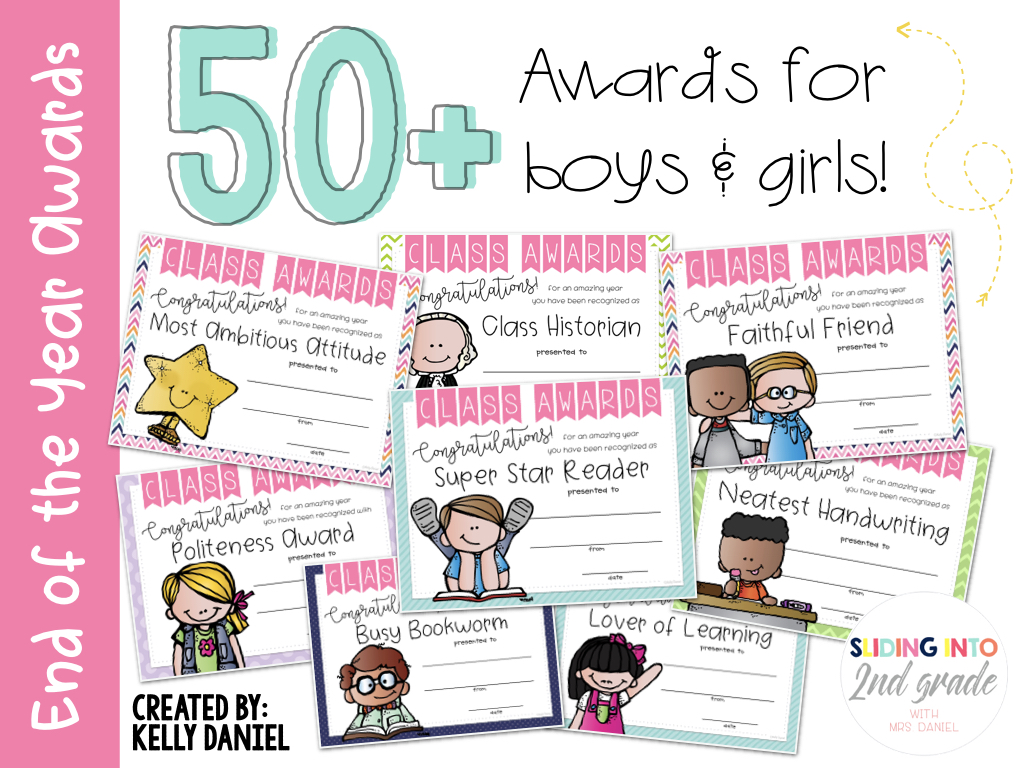
It’s already May, which means this is when many teachers are beginning to plan and prep their end of the year festivities - including their student awards. The end of the year is an exciting time, for both teachers and students alike. It’s a time where the school year starts to wind down, testing is either close to finishing or just getting started, and students begin their month of review material. In the middle of all of this are the coveted student awards.
Every school does something a little different, but for my old school we always had our grade level awards held inside our classrooms and invited our student’s families to be a part of this special day. Although prepping these awards (and the subsequent class party afterwards) can be tiresome, it’s nonetheless exciting to recognize each of my kiddos and the hard work they’ve put into the school year. It’s also a great time to gather parents and have them acknowledge their child’s hard work as well.
You’re Invited!
For any party one needs good invitations! This download comes complete with editable invitation templates that are easily copied and sent off with your students in advance. It’s a simple invite that outlines the ceremony date, time, and location. You can also hand sign it yourself before copying! This allows parents to easily tack onto their fridges and keep an easy reminder at home or to share with family members.

Close to every award under the sun!
There are a lot of reasons for a child to be recognized on awards day - and it goes beyond just ‘class clown’ or ‘best dressed.’ I’m sure those are acceptable things to acknowledge, Lord knows we have those students in our classrooms, but I think it’s really important for our kiddos to know they have contributed to the class and themselves in meaningful ways - not just because they’re funny.
In my awards resource you will find a variety of superlatives that can relate to your students. From the ‘Lover of Learning’ to that child with an ‘Inquisitive Mind,’ you’ll be able to easily find the right award for each little learner.
Also, most of the awards are complete with a boy and girl template! I wanted to make sure that each award is customized for the needs of most classrooms. However, you may use these printables in any way you want - boy, girl, or both!
These awards also come in a .zip format which includes a PDF for those wanting to just print and write in their own names - or if you’d like to edit them, to include your own fonts by using a text box over the PowerPoint version.
Either way, these awards are virtually the easiest thing for you to prep!
Preparation hasn’t been easier!
We all know that with the end of the year comes a lot of busy work to keep our kids’ minds engaged all the way up to the last day. This also means teachers are looking for resources that take minimal effort in preparing - I mean, we’re just as ready for the summer as our students!
So this resource couldn’t be more easily prepped!
That’s it!
With the prep work out of the way for your class awards you can spend your cherished time on other more important things! So hopefully this resource will make your days easier!

May 11, 2018
How to Pray | A Bible Lesson

Moving to California four years ago was a life changing choice. I was a newlywed and had our life, and my teaching career, already established. However, my husband received a job offer that relocated us from one coast to the other. Four days on the road and finally we had reached our new home with a fresh outlook and a hopefulness for our future.
It took me some time to find work right away, but eventually I was lead to a private Christian school where I would end up spending the next few years as an assistant teacher. First, I began in the preschool then worked my way to first and eventually back to second grade. During those years I learned a lot, had a baby in between, and due to my husband's new job we were once again relocated but this time to San Diego.
Looking back on my time at my school, I cherish those memories because I was able to work in an environment that was faith based and I could share in that with my students. One of the biggest skills that my second graders didn't quite have a firm grasp on was prayer. Prayer was sprinkled in throughout our day from morning meeting to honoring special occasions and events within our classroom as well as school-wide, so I found it to be important to break it down for my kids in a way that made sense and gave them plenty of opportunities to practice.
Which leads me to...
Teaching Prayer

Five-Finger Prayer Method
I should first point out I am not Catholic, but I have to say just how much I adore Pope Francis and his teachings. Pope Francis has been, in my opinion, more active across the world and in a lot of ways very forward thinking when it comes to doctrine and acceptance amongst Christians and Catholics alike.
One concept that he shared for children back before he was Pope was the Five-Finger Method for praying. It's a super simple to-the-point approach that allows for children to remember how to pray to God - expressing more than just the wants or needs of themselves. By using each finger, it reminds us of the people we should think about when praying.
* Amazon affiliate link

1: Your thumb is closest to you, so remember to begin by praying for someone close to your heart. These people are the easiest to remember.
2: Your pointer finger represents the people who guides, teaches, or heals you. Your prayers should be for guidance, discernment, knowledge, or courage to better be helpful towards others.
3: Your middle finger is your tallest finger, which represents the leaders within our schools, communities, and country. This includes prayers for those who make important decisions that could have a direct affect on others and ourselves.
4: Your ring finger is your weakest finger, so it is important to pray for those who are weak due to illness, homelessness, or have challenges or struggles.
5: Lastly, our pinkies are last and represents prayers for ourselves. By praying for others first, by the time we get to praying for ourselves and our needs our perspectives may change. The more we realize what others are going through, it can ultimately alter what we pray for.

Letters to God
One way, aside from praying, to communicate with God is by writing our prayers down. A lot of kiddos don't realize that God hears us just the same and these worksheets are a great resource in the classroom - or could even be put in a writing center during language arts!
This download comes with differentiated writing pages with and without guides. Choose which best fits the needs of your classrooms and print! Another handout I've included are prayer requests! It's another guided handout that directs students to fill in the blanks with people or circumstances they'd like to pray about (or even have others pray for them).

Scripture Journals & Reflections
One of the big ways we reflect on the month's scripture lessons are with consistent reflections and shares. After teaching a piece of Scripture, students copy the verse, record the verse chapter, and reflect on what they've learned or how they could carry on the lesson in their lives. At the end, they can draw a simple picture representing their reflections.
I look forward to using this not just in my own classroom, but also to have as a home resource with Greyson when he's older!
You can pick this resource up over at my shop today!
March 30, 2018
From Past to Present: Famous Americans MEGA Unit

You guys, I am so excited to finally share the pride and joy I’ve been working on and cultivating for the better half of a year. I began this product when pregnant and knowing I wanted to create an engaging note taking flip-book I set to work. Then, you know, I had a baby and all and somehow this sat on the back burner. As I got adjusted to being a new mom (and putting in a lot of effort into my lifestyle blog) I rediscovered this project and set to work on it once again.
Today, I am happy to share with all of you everything you’ll need to engage those little learners of yours when introducing them to your unit on Famous Americans!
Due to every state being different in terms of which Americans one studies in grades K-3rd, I’ve decided to include the majority of the ‘famous’ ones:
- George Washington
- Abraham Lincoln
- MLK
- Jackie Robinson
- George Washington Carver
- Susan B. Anthony
- Harriet Tubman (as seen in photos)
- Rosa Parks
- Thomas Jefferson
- Thurgood Marshall
- Betsy Ross
- Benjamin Franklin

There are two types of note workbooks available for you.
First, I have a basic template that is easily put together and enhances any curriculum you already use to instruct. Each slide is a full page perfect for your little learners to fill in the basic information about each historical figure. Simply print copies and teach one figure at a time or opt to print the ones you need and keep them in one handy workbook.

Second, is this flip-book style of note taking which surely to engage your students and keep their minds thinking about the particular person being covered that day. There are 5 slides per figure (cover page, biography, fun facts, contribution, and timeline) and each page requires the student to either complete the information whether it be through research or copying from a provided presentation by you, the teacher. The contribution page will demonstrate that the student understands the figure’s importance to U.S. history and citizenship, and finally, the timeline is an extra skill practice by filling in important events during that persons life. It’s a great culminating activity!
Pick & Choose What To Teach!
Because it’s a flip-book teachers can also choose whether to omit a page. Don’t need to cover timelines or afraid students aren’t ready for that skill yet? Don’t include it! ;)
Assessments or Anecdotals?
This packet is also great for using as anecdotal notes or assessments with having the first two pages be a guided instruction piece, leaving the writing and timelines to be graded. This download really works in any capacity!
TAKE A CLOSER LOOK!
Biography
Each booklet begins with a section for students to copy the name (a bit of handwriting practice) of the historical figure in which they’re learning. Basic facts such as birth and death dates are provided, a state/colony diagram for students to fill in where they were born, and a few biographical facts to fill or color in.

Fun Facts
After the biography section, students will move onto the chunkiest part of information presented. I’ve personally designed this section to be a mixture of skill practice and requires students to answer simple questions or fill-in-the-blank with specific pieces of information about that person. This section can be used along with any unit plan/PowerPoint slides, etc. or can be easily used as a review packet.

Contributions
The biggest part of learning about our Famous Americans are recognizing the contributions they’ve made on our society or country as a whole. Each person is a valued member of our nation’s history and it’s important for students, as citizens of the United States, to be able to understand how they’ve impacted change, civil rights, and progressed our country over time.
This section ties in writing skills by focusing on a paragraph using the guiding phrases. Students simply take the information they filled in on the previous page (along with any other information they learned) and condense it into a paragraph summing up how that figure contributed to our country. I love this section because each student can reflect and use whichever facts they like; making each paragraph unique.

Timeline
A timeline is a skill students are introduced to and use in first grade. However, timelines make appearances in second grade as well when students begin reading nonfiction books and learn to use them as tools to comprehend their reading. Why not tie, yet again, this skill when studying Famous Americans?
This section can differ depending on which grade you teach.
- You may provide your own timeline where students simply copy what you’ve already compiled
- Students can be sent to a nonfiction station that provide a variety of text on that person. While reading, they record what they find as they fill in their own timelines.
- As a whole group you can project events in that person’s life out of order for students to rearrange based on their knowledge.
See? There’s all kinds of ways to work on chronological order with timelines no matter how facilitated you’d like to be with your students. Either way, they’re engaged in their learning and practicing an important skill all at the same time.

Teacher Answer Keys!
Each packet whether you use the traditional notes or the flip-book comes with a Teacher Answer Sheet. This provides all the answers to the fill-in-the-blanks, which, of course, takes the guesswork out of the equation on your end!
Easy Preparation!
Another reason this packet is an essential product to have for your classroom instruction is because it’s a simple: print, copy, staple and done! You can also print them out and have your students assemble those packets or put your very kind parent volunteers to work on the task! Either way, this download takes all the hard work out of your hands.


Subscribe to:
Posts (Atom)
Hey there!
